
Introduction
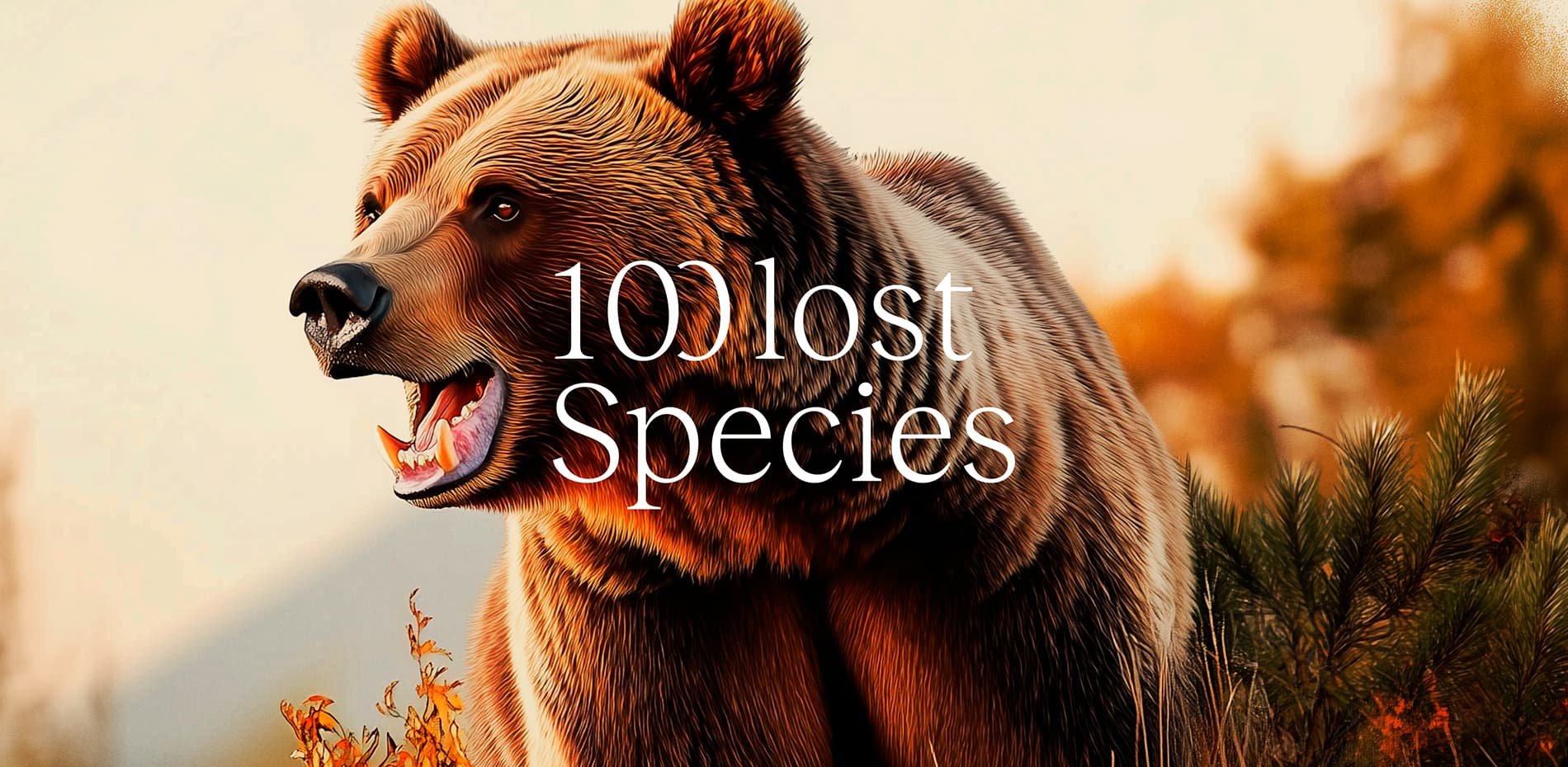
With 100 Lost Species, we set out to create a digital story about extinction that people could actively explore. Developed by Immersive Garden in collaboration with 60FPS, the project examines how species disappear over time and how human decisions shape that trajectory. From the beginning, it was conceived as an open narrative, one where visitors decide where to begin, what to engage with, and how deeply to explore, while understanding that different choices lead to very different outcomes.
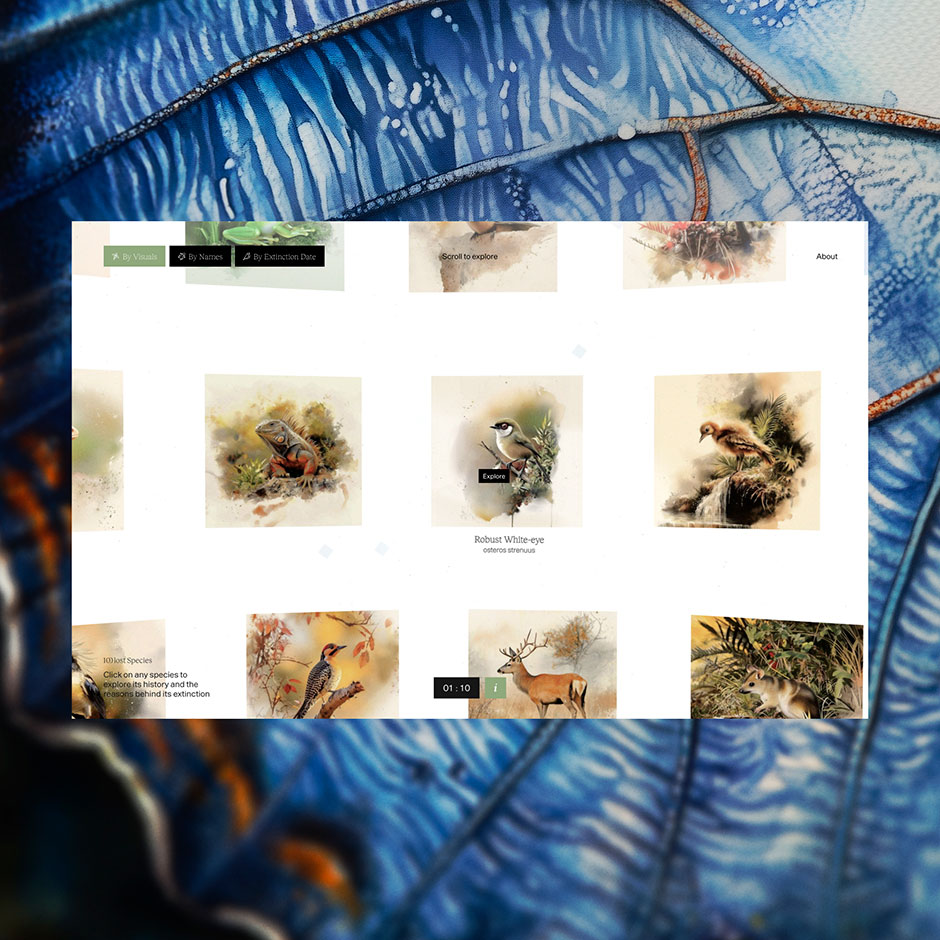
Extinct animal species are brought back visually and organized within a scrolling format that encourages free exploration. Visitors can move through all 100 species, gravitating toward those that capture their attention through name, appearance, or historical context. As each story unfolds, a contrast becomes unavoidable. Some species exist only as memory, while others remain on the edge of disappearance.
In the background, a timer runs continuously. It is not tied to a real-world deadline or a specific event. It simply advances, uninterrupted, and when it eventually reaches its end, it reinforces a clear idea. Extinction moves forward whether it is observed or ignored.
The intention was never to educate through charts or dense data. The goal was to create a pause. A moment to look closely, reflect on what has already been lost, and consider what can still be protected.
Concept Creation: Time as the Core Narrative
From the earliest stages, time emerged as the foundation of the project. Extinction is irreversible. What disappears cannot return, and what remains is inherently fragile.
This concept materialized through the presence of a timer that runs continuously while visitors navigate the site. It does not reference a real deadline or a known event. Instead, it functions as a quiet reminder that time progresses regardless of awareness or intent.
Each species is presented within a scroll based journey that allows non-linear and linear exploration. Visitors are free to move across the collection, discovering species according to curiosity. While each path is personal, the conclusion of loss and extinction is shared.
Interaction is intentionally restrained. Nothing demands attention or forces progression. The interface invites visitors to slow down, linger, and move forward on their own terms, with a timer remaining a constant presence in the background, waiting to serve its purpose.
Visual Reconstruction and Creative Process
Because extinct species cannot be photographed or filmed, visual reconstruction became a central part of the creative process. AI was used as a tool but never as a shortcut.
The design team invested significant time in research, studying scientific descriptions, historical references, and anatomical records. AI assisted in generating initial visual material, but every species was refined through multiple iterations. The objective was not invention or spectacle, but rather a clear vision of what it used to be and no longer is.
The final visuals are presented in an almost archival manner. We intentionally avoided dramatic lighting, exaggerated motion, and expressive stylization. This approach allowed the imagery to sit closer to a dreamy memory than pure fiction. Reinforcing respect for the species represented.
AI remains invisible throughout the project. It supports the process without becoming the focus of the work.
Visual Language: Space, Sound, and Restraint
The visual direction of 100 Lost Species is deliberately minimal. Every decision was guided by the need to give space to the subject matter.
Soft watercolor textures, neutral backgrounds, and generous negative space allow each species to exist without distraction. Typography remains simple and legible, supporting rhythm rather than demanding attention. Motion is slow and considered, encouraging contemplation rather than urgency.
Sound design follows the same philosophy. It adds emotional depth while remaining subtle, supporting immersion without overpowering the visuals.
Throughout development, one question guided every choice. Does this element add meaning, or does it introduce noise.
Storytelling Through Scrolling and Interaction
The project opens with an interactive carousel of species, presenting a sense of abundance before absence. From that point forward, scrolling becomes the primary means of engagement.
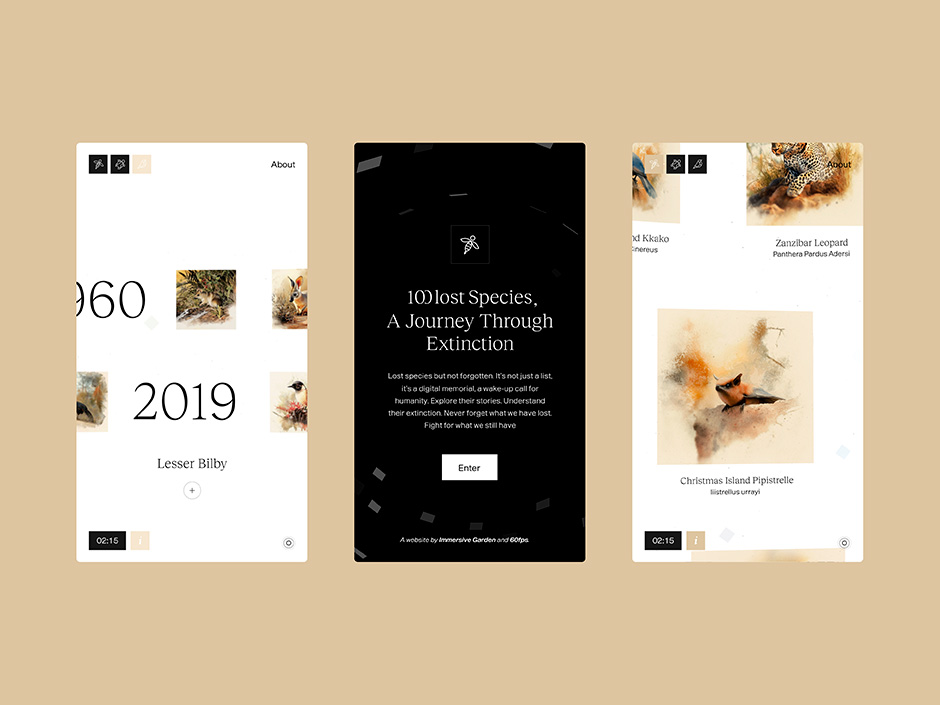
Visitors can browse freely and reorganize the collection using predefined filters such as name, visual characteristics, or extinction date. This approach removes the need for traditional navigation while giving visitors control over how they interact with this immersive experience.
As each species is explored, imagery and short text fragments appear gradually. These elements provide context without overwhelming detail. Visuals, copy, and sound unfold at a steady pace, allowing engagement without pressure.
The timer remains visible throughout, acting as a constant reminder that time continues to pass.
Wake-up Call
The call to action is woven directly into the narrative, rather than isolated at the end.
While extinction cannot be reversed, action remains possible for species that are currently endangered. Donation links connect visitors with environmental organizations actively working in conservation and protection.
The messaging avoids emotional pressure or alarm driven tactics. Instead, it offers a quiet opportunity to respond, allowing reflection to transition naturally into action.
Performance and Technical Considerations
Although the project is driven by emotion and reflection, technical performance was a critical priority. Motion heavy interfaces and high resolution visuals can easily become burdensome if not carefully managed.
Development focused on smooth scrolling behavior, controlled asset loading, and strong mobile adaptability. The objective was to ensure stability and accessibility across devices, allowing the narrative to remain uninterrupted and available to a wide audience.
Collaboration
100 Lost Species was developed in close collaboration with 60FPS. From concept through execution, design and development evolved in parallel.
This shared sensitivity toward the subject allowed creative and technical decisions to remain aligned. Continuous dialogue ensured cohesion while respecting both narrative intent and technical constraints.
Team
Conception: Dilshan Arukatti / Alexandre Saad / Alexis Demachy Creative direction: Dilshan Akuratti Art direction: Paul Leroy Al illustrations: Nicolas Courjean Content creations: Cassandre Gerbouin / Melek Ben Hamida / Alexandre Saad / Alexis Demachy Project management: Melek Ben Hamida Development: Maxime Mangin Sound design: Mooders Design: Immersive Garden Development: 60fps
Technologies Used
Front end HTML, CSS, JavaScript
Interactions and motion GSAP and a custom scroll based animation system
Visual reconstruction Custom AI assisted workflows combined with manual design refinement